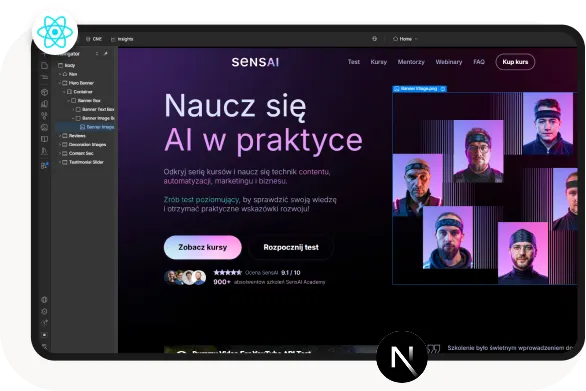
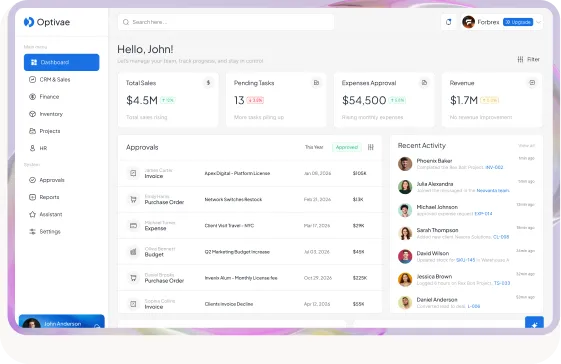
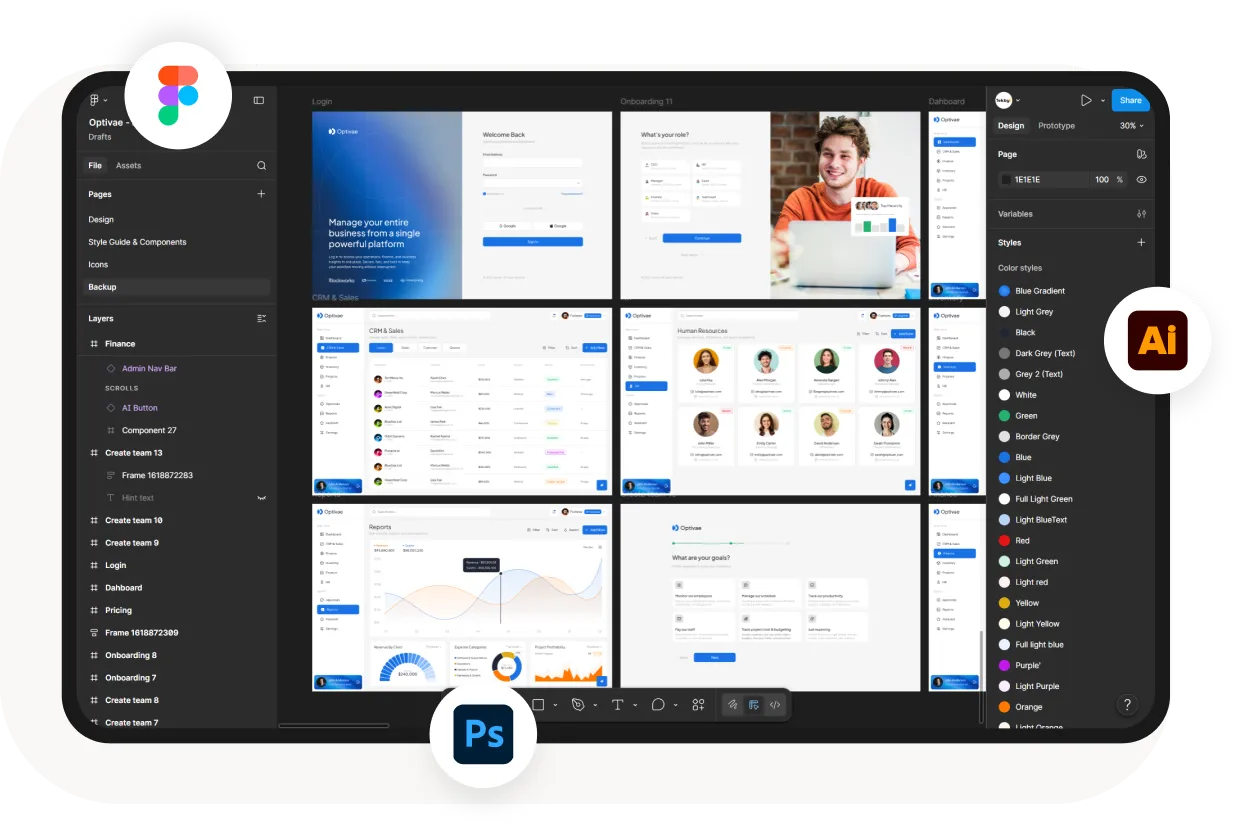
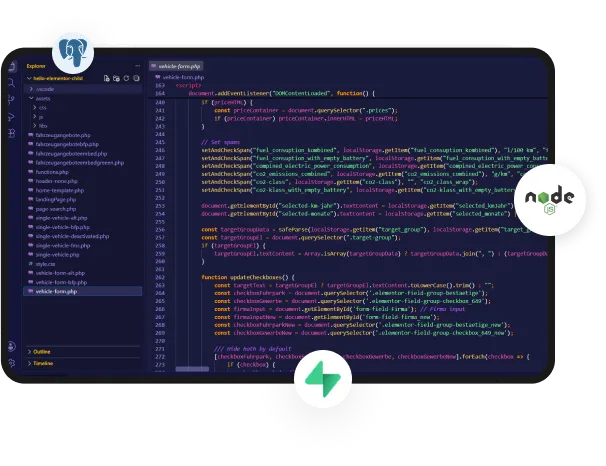
Bring your interface, application logic, and data together in one connected product. We build web applications around your workflows, users, and business requirements.
For building interactive interfaces with reusable components and consistent behaviour across application screens.
PostgreSQL
For managing structured application data and relationships between users, records, and transactions.
ChatGPT
For exploring technical ideas, drafting documentation, and assisting with implementation and troubleshooting tasks.
GitHub
For managing source code, reviewing changes, and coordinating development across the project team.
Vercel
For deploying compatible applications and managing preview environments throughout the development process.
Next.js
For developing React applications with routing, rendering options, and server functionality suited to the project.
Claude
For supporting technical exploration, reviewing implementation approaches, and assisting developers under team review.
MongoDB
For storing document-based data where a flexible structure fits the application’s requirements.
Supabase
For providing database services, authentication, and file storage where appropriate for the application.
Node.js
For developing application services, APIs, and server-side connections to external systems.
Words from Clients.
5.0 Reviews
Operations Management Platform
“Our team was moving information between spreadsheets and separate tools. YODO helped us bring the main workflow into one application, with clear screens and permissions for different roles.”
Lucas Warren
Operations Director, Brookmere Logistics
5.0 Reviews
Customer Portal Development
“The project involved more than a polished interface. We needed the portal to connect with existing systems, and the team worked through those requirements carefully while keeping us informed.”
Grace Fletcher
Managing Director, Elmbridge Services
5.0 Reviews
SaaS Application Build
“Having the design and development work coordinated made decisions easier. We could follow progress, review the important journeys, and understand what was ready for each release.”
Ryan Cooper
Co-Founder, Clearwill
Everything You Need to Know Before We Start
Understand how we plan, build, and support applications that connect your interface with the systems behind it.
Full-stack development is useful when your product needs both a user interface and custom functionality behind it, such as accounts, permissions, stored data, or integrations. We review your requirements to determine whether a custom application or an existing platform is the better fit.
Can you improve my existing application without rebuilding it?
Yes, where the current architecture and codebase support the changes you need. We first assess the application, documentation, and dependencies, then recommend targeted improvements or explain where broader changes may be necessary.
Which technologies do you use for full-stack development?
Our toolkit includes React, Next.js, Node.js, PostgreSQL, MongoDB, and supporting services. We choose the stack around your product’s requirements, existing systems, and the team that will maintain it.
Can you connect my application with existing business tools?
Yes, where those tools provide suitable APIs or integration options. We review access, documentation, data flows, and service limitations before defining the integration scope.
How do you approach application security and customer data?
We define access requirements and consider authentication, permissions, input validation, and data handling during development. Specific security, compliance, and independent testing requirements should be agreed in the project scope.
Will my application handle more users as my business grows?
We plan around your expected usage and discuss likely growth needs during discovery. Significant changes in traffic, data volume, or functionality may require further infrastructure, optimisation, and testing.
What if my application becomes slow or starts crashing?
We investigate the symptoms, review available logs, and identify likely causes before recommending fixes. Monitoring, incident response, and ongoing performance work can be included in a separate support agreement.
How long does a full-stack development project take?
The timeline depends on workflows, integrations, data migration, and technical complexity. After discovery, we define milestones and identify the feedback, access, and decisions needed to keep delivery moving.
Will I have ownership of the source code and database?
Your agreement defines ownership, access, and the transfer of custom project deliverables. Third-party software and services remain subject to their own terms, and we agree on account ownership and handover arrangements before launch.
Do you provide support after the application goes live?
Yes, within the launch support period defined in your proposal. Continued maintenance, monitoring, fixes, and feature development can be arranged through a separate scope or ongoing partnership.
Clear Pricing for Your Application Build
Choose focused development support, a complete application project, or ongoing capacity for your product roadmap.
Sprint
A focused engagement for a technical assessment, a selected integration, or a clearly defined application improvement.